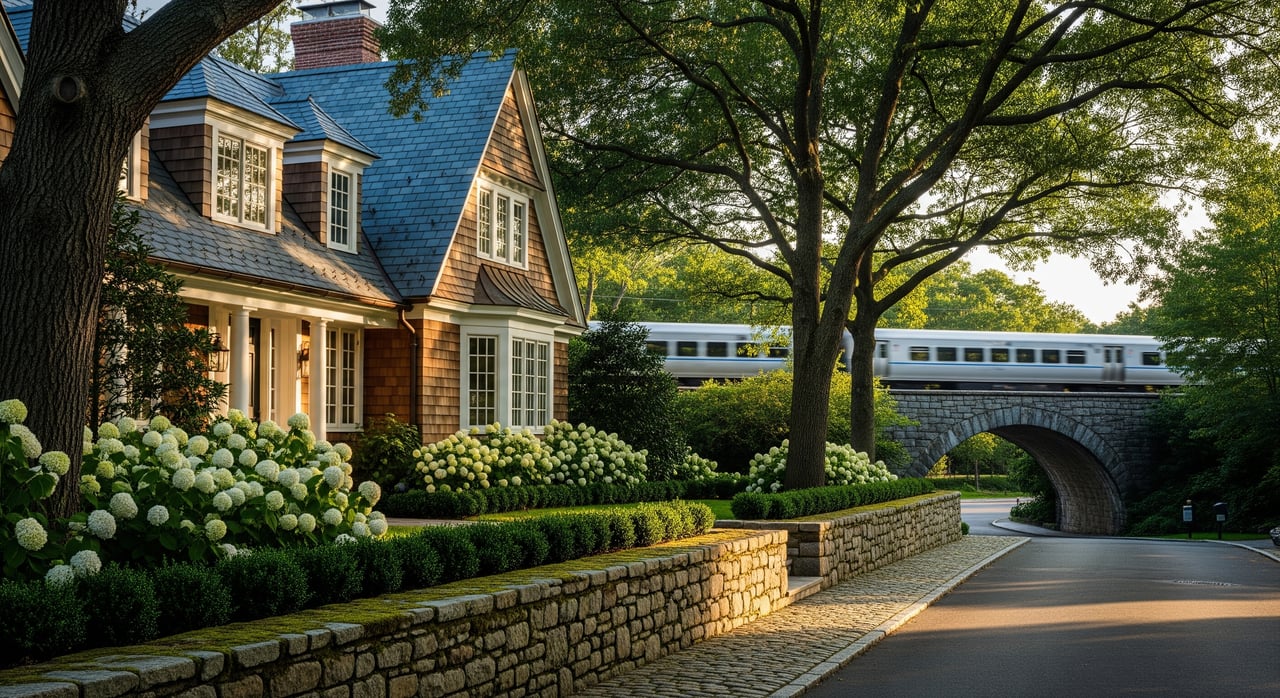
If you are eyeing Greenwich for a New York City commute, a few minutes saved each way can change your day. You want a neighborhood that fits your lifestyle and helps you get to Grand Central on time without the stress. In this guide, you will compare Greenwich neighborhoods through a commuter lens so you can make a confident choice. Let’s dive in.
Greenwich commute basics
- Greenwich sits on the Metro-North New Haven Line, with direct service to Grand Central Terminal.
- There are four in-town stations: Greenwich, Riverside, Old Greenwich, and Cos Cob.
- Express trains stop more often at Greenwich and Riverside. Typical peak travel times run about 40 to 55 minutes depending on train type and time of day.
- Many station lots use permits with wait lists. Daily spaces can fill early on peak days.
- Driving to Manhattan on I-95 is possible, but travel times vary widely during rush hour, often 60 to 90 minutes or more.
Rail access and station logistics
Greenwich station
This is the town’s primary station and a frequent stop for peak express trains. You will find one of the faster rides into Grand Central, often toward the lower end of the 40 to 55 minute range depending on schedule. Downtown walkability means many nearby residents can walk or bike to the platform. Municipal and private parking exists, though permits and daily availability can be limited.
Riverside station
Riverside sees a mix of express and local service during peak hours. Travel times are competitive with Greenwich station on trains that skip stops. Quick access to I-95 makes it convenient if you drive to the station from surrounding streets. Parking is a mix of municipal options and nearby residential access, with rules that can vary by block.
Old Greenwich station
Old Greenwich offers frequent service with some peak trains running semi-express. Ride times are similar to Riverside on the faster runs, and slightly longer on locals. The village is walkable, which makes last mile simple if you live nearby. Station parking is typically permit driven and may have a wait list.
Cos Cob station
Cos Cob provides reliable commuter service but has fewer express stops than Greenwich or Riverside. Expect ride times comparable to Old Greenwich on locals, sometimes slightly longer due to stop patterns. Parking is more limited, so many commuters plan for early arrival or alternative arrangements. If you are driving to Westchester or to the Merritt Parkway, road access from many Cos Cob pockets is convenient.
Parking, permits, and last mile
- Most lots near the four stations use municipal permits, and wait lists are common. Daily metered or pay-by-app options may be available but can fill early.
- If you rely on parking, confirm current permit status and rules with the Town of Greenwich parking office before you commit to a neighborhood.
- Many commuters choose a park-and-ride strategy by driving to neighboring stations with more parking or different service patterns.
- If walkability is a priority, focus on homes within an easy stroll of Greenwich, Riverside, or Old Greenwich stations.
Driving to Manhattan: what to expect
- The primary route is I-95 southbound, with US-1 as a local alternate. The Merritt Parkway is a common route for regional trips but does not run directly to Manhattan.
- Peak travel times vary with congestion and incidents. Plan for roughly 60 to 90 minutes during rush hour with the understanding that delays can push it longer.
- Include tolls and Manhattan parking in your total commute cost. For many commuters, the predictability of rail and the ability to work or unwind on the train outweigh driving.
Neighborhood snapshots for commuters
Central Greenwich and Greenwich Avenue
- Nearest station and service: Greenwich station with frequent express options during peak periods.
- Parking and last mile: Municipal and private parking in the downtown area, plus a highly walkable core for those who prefer to skip the car.
- Driving access: Quick on and off I-95 and US-1.
- Lifestyle and housing: A lively town center with shopping, dining, and services. Housing ranges from historic single-family homes on smaller lots to upscale condos and apartments near the avenue.
- Relative price positioning: Generally among the town’s higher priced areas due to walkability and premier rail access.
Riverside
- Nearest station and service: Riverside station with a mix of express and local trains in peak hours.
- Parking and last mile: Municipal lots and nearby residential access. Some cyclists take advantage of local paths and quiet streets.
- Driving access: Fast connection to I-95 and nearby arterials.
- Lifestyle and housing: A village feel with single-family homes and waterfront pockets. Local amenities and a calm residential character define the area.
- Relative price positioning: Typically high, with strong buyer demand for its rail access and neighborhood feel.
Old Greenwich
- Nearest station and service: Old Greenwich station with frequent service and some semi-express options.
- Parking and last mile: Walkable village center; station parking is permit oriented.
- Driving access: Convenient to I-95.
- Lifestyle and housing: A coastal village setting with local shops and year-round amenities, plus access to beaches nearby. Homes range from cottages to larger single-family properties.
- Relative price positioning: High, sometimes slightly below central Greenwich, with strong appeal for village character and coastal access.
Cos Cob and nearby backcountry pockets
- Nearest station and service: Cos Cob station with solid commuter service but fewer express stops.
- Parking and last mile: Limited station parking. Some neighborhoods are walkable to the platform; others rely on street parking rules and early arrival.
- Driving access: Convenient to both I-95 and the Merritt Parkway depending on the exact location.
- Lifestyle and housing: More suburban settings with a variety of home styles, including colonials and mid-century homes, and larger lots in some areas.
- Relative price positioning: Mid to high, often more moderate than central Greenwich but still premium for the region.
Belle Haven, Byram, Glenville, and Pemberwick
- Nearest station and service: Many homes here require a short drive to Greenwich or another station. Byram, at the western edge, has less direct station access.
- Parking and last mile: Plan for a drive-and-park routine or ride-hail to the station. Check local residential permit rules.
- Driving access: Strong access to major roads including I-95.
- Lifestyle and housing: A wide spectrum, from high-end waterfront properties in Belle Haven to more modest segments in pockets of Glenville and Pemberwick.
- Relative price positioning: Broad range depending on sub-neighborhood, lot size, and proximity to water or town center.
Mid-Country and North Greenwich
- Nearest station and service: Typically a drive to the station or to neighboring towns.
- Parking and last mile: A car is essential for most homes in this area.
- Driving access: Often convenient to the Merritt Parkway, which is practical for regional travel and Westchester commutes.
- Lifestyle and housing: Larger lots and a more private, suburban or semi-rural feel.
- Relative price positioning: Varies widely, including many higher-end estates and some comparatively moderate pockets.
How to choose your best-fit neighborhood
- Prioritize your arrival window: If you must be at a Midtown desk by a precise time, target homes near Greenwich or Riverside stations where express stop frequency is higher.
- Balance time and lifestyle: If a village vibe is important, Old Greenwich can be a great fit, with semi-express and frequent service that still keeps your commute reasonable.
- Think about parking reality: If you need to drive to the station, contact the town parking office early to understand permit timing, daily options, and wait lists.
- Consider hybrid work: If you ride 2 to 3 days a week, a slightly longer trip or a neighborhood that requires a short station drive can open more housing choices.
Plan your commute like a pro
- Test trains on a weekday morning and evening from at least two stations you would use.
- Time both an express and a local or semi-express option to see realistic ranges.
- Visit station lots at the same time you would arrive to gauge daily space turnover.
- Map your last mile: walk, bike, or quick drive, including realistic parking or drop-off plans.
- Price out monthly costs: compare a monthly rail pass versus pay-per-ride, plus any parking, tolls, and occasional ride-hail.
- Have a backup plan: know a second station or route in case of service changes or lot closures.
Final thoughts
Greenwich gives you four stations, varied express service, and neighborhood options that range from walk-to-town convenience to quiet privacy a short drive from the platform. If you define your schedule, test real trains, and confirm parking, you can find a home that fits your life and keeps your New York commute on track. Ready to narrow your list with local insight on stop patterns, parking nuances, and last-mile logistics? Connect with The Greenwich Lifestyle Team for a tailored neighborhood game plan and on-the-ground guidance.
Schedule a Consultation with The Greenwich Lifestyle Team
FAQs
Which Greenwich station is typically fastest to Grand Central?
- Express trains that stop at Greenwich or Riverside are usually the quickest, though specific times depend on the exact train and time of day.
How long is the train ride from Greenwich to Grand Central?
- Typical peak rides range about 40 to 55 minutes depending on whether you catch an express, semi-express, or local train.
Is station parking easy to get in Greenwich?
- Many lots use permits and maintain wait lists; daily spaces exist at some stations but can fill early on peak mornings.
What should I know about driving to Manhattan from Greenwich?
- Expect wide variability during rush hour, often 60 to 90 minutes or more, plus tolls and higher parking costs in Manhattan.
How does a hybrid schedule change my neighborhood options?
- If you commute a few days a week, you may accept a slightly longer ride or a short station drive, which can expand your home search and value options.